Sunday, January 30, 2011

February Editorial

Thanks to whoever tweeted about my year-in-review post at the Video Data Bank, I seriously appreciate it. Running Toronto Film Review is a lot of work and it is always feels good to be appreciated.

From now on, I am reserving my Monthly Film Listing as a sort of Editor’s Notes, in the tradition of writers like Helen Faradji, Michel Ciment, Mark Peranson, and John Macfarlane (whose editorials in The Walrus are great), and following will be my Viewing Acknowledgements, which I will add onto as the month progresses. (I hope this will provide a sort of consistency to Toronto Film Review).

In January, I went to the Carlton Cinema, at Carlton and Young, for the first time and in this intimate little hall, I watched Yang Ik-Joon’s Breathless, on a cold January day, with three other people in the room: it is beautiful work of art. And, The Agony and Ecstasy of Phil Spector is probably the best documentary to play, so far, at the Lightbox. I cannot recommend it enough.

I am currently reading Brad Stevens book on Monte Hellman and I am going to write about it, which you can expect this month. Then I want to write about the January issue of Positif, when I can get a hold of a copy. And, once I make it there, I want to review the Jack Chambers exhibit at the London Museum,on until April 3rd. Hopefully, if I can do all of that, then afterwards I want to read and write a book review of Emmanuel Burdeau’s book on Judd Apatow (thanks Andrea!), but it might have to wait until March.

In regards to New Releases at the Lightbox, I want to see The Time That Remains, Alamar, Des Hommes et des dieux, and whatever Cinematheque stuff I can go see. Nothing really jumps-out at me that is playing at the Bloor. Though for a lot of the other repertories, the new listings are only added the week of. The Toronto Film Society has a couple good double-bills. And I also want to see Biutiful.

To contextualize the writing on this website, here, in my new monthly editorials, I hope to highlight other good articles that I have been reading:

In Cineaste (Winter 2010), there is Antoine de Baecque’s 'Andre Bazin in Combat', which is an excerpt from a forthcoming collection of essays edited by Dudley Andrew, 'Opening Bazin: Postwar Film Theory and Its Afterlife'. In the new issue of Cahiers (N. 663), the événement are 'the films the most anticipated of 2011', some titles include Cronenberg’s A Dangerous Method, Spielberg's The Secret of the Unicorn, Sokouruv’s Faust, Alexei Guerman’s L’Histoire du Carnage d’Arkanar, and new movies from Bruno Dumont and Bertrand Bonello. In Film Comment (January/February 2011), Gavin Smiths writes about and interviews, “A master of thoroughly modern romance”, James L. Brooks. At Undercurrent, Brad Stevens writes about Blake Edwards in the ‘80s. And in the new 180° (January-April 2011), Steve Gravestock has an essay on Denis Cote to kick-off The New Auteurs series. At Cinema Scope Online, Andrew Tracy and Adam Nayman have a couple of new reviews up. And lastly, Serge Toubiana has been quite busy at his blog, with some articles on his Tunisians friends - particularly in reference to the countries recent coup d’etat, comments on Thierry Jousse’s (a Cahier-critic-turned-filmmaker) new film Je suis un no man’s land, protest of the imprisonment of Jafar Panahi and Mahammad Rasoulov, and the reasons for the Cinematheque Francaise ongoing Hitchcock retrospective, “Le plaisir!”, with a link to a podcast series, that Serge worked with in collaboration with Nicolas Saada, of the original Alfred Hithcock and Francois Truffaut interview, moderated by Helen Scott.

It is worth mentioning that the Cinematheque Quebecoise is having a Claudra Jutra retrospective and, to anticipate a new box set of Joyce Wieland’s films (is this a first?) they are going to selectively screen some of her films. While at the Anthology Film Archives (32 Second Avenue) in New York they had a retrospective on Abel Ferrara, I would have liked to have gone, except my passport expired, which sucked. Something to work on, I guess…

*****
The Illusionist (Sylvain Chomet, 2010)
** (Worth-Seeing)

*****
Another Year (Mike Leigh, 2010)
**** (Masterpiece)

*****
The Time That Remains (Elia Suleiman, 2009)
***(A Must-See)

*****
The Way Back (Peter Weir, 2010)
***(A Must-See)

Friday, January 21, 2011

International Spy(ies)

Espion(s) (Nicolas Saada, 2010)
**** (Masterpiece)

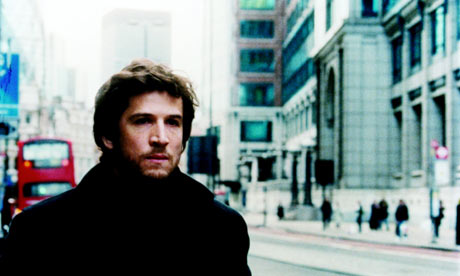
Nicolas Saada’s first feature-length film Espion(s) is a gripping suspense thriller in the tradition of directors that are inspired by Alfred Hitchcock, which includes Roman Polanski, Brian De Palma and Claude Chabrol, as the film includes its McGuffin, the wrong man, and a portrait of a world-weary society. The film begins at night-time at an airport as a couple of baggage inspectors, one who is reading Bettelheim’s The Informed Heart, pluck through an inviolable Syrian-diplomat’s bag. One of them discovers a bottle of cologne, sprays it on himself, which ends up carrying Nitromethane, so it burns his skin and when he drops the bottle, it explodes. He is set on fire, and he dies at the hospital. The other guy, Vincent (Guillaume Canet) has shaggy hair, a beard, workman clothes, and we learn that he used to be a really bright student, “I never had a long-term plan”. He gets fired as his boss discovered that they were stealing, he is possibly facing jail time. The anti-terrorism organization DST approaches him to cooperate to find the real criminals, they hire Vincent as an agent and he is off to London.

Vincent makes his way around London quite gracefully, as the film seamlessly goes from English to French, in the city of the Big Ben, the Millennium Wheel, the Burlington Arcade, and a rising immigration population. Vincent is working with M. Palmer (Stephen Rea) for the MI5 to help them apprehend this guy Peter Burton (Vincent Regan) who with Malik (Alexander Siddig) are bringing illegal explosive chemicals to Europe, and to actually infiltrate them, Vincent will have to befriend Peter’s French wife, Claire (Geraldine Pailhas).

What stands out in this conventional story of espionage are the social-realities that are brought up, the taut moments of suspense, the charming romance, and the mise-en-scene. Vincent’s cover-up is that of a doctor who works for an NGO and the news-footage he watches are of over-burdened doctors in Africa fighting AIDS and the tragedy of Darfur, while for Claire it involves living with the guilt of her ex-husbands suicide and the tristesse of not being able to see her children. The suspense comes from long searches for people and an impressive example takes place in the London Underground Station. While the mise-en-scene contributes to the mood and atmosphere of the film, for example, as when in a museum Vincent and Claire look up at a Pre-Raphaelite painting of an elegantly posed, though melancholy women. The parallels between Claire and the painting, memories of a gift she earlier received, and allusion to Kim Novak in Vertigo (1958) all contribute to a striking moment.

Guillaume Canet who has acted in numerous French films and directed Tell No One (2006) is great as Vincent because his sorrowful mug encapsulates a tucked away melancholy and regret, or it can also be exuberant, fun and charming. While his physical characteristics are similar to the Edgar Ramirez type from Olivier Assayas’ Carlos (2010). The cinematography, by the director of photography Stephane Fontaine, preference is naturalistic as he films people as they are, with stylistic touches that include filming through windows, shifting focal planes, tracking shots, and steady-cam shots. The rhythm and impact of a scene comes across through its editing.

In one of my favorite scenes in the film, Vincent switches channels from watching a zebra documentary to Frank Sinatra playing drums in Otto Preminger’s The Man With The Golden Arm (1955; one of the great Beat movies). Nicolas Saada, who wrote in Cahiers du Cinema in the 1980s (to hear his more recent comments visit Dave Kehr’s website), knows what to do to make a captivating and entertaining film. Espion(s) is a real pleasure.
*****
Espion(s) came out January, 2009 in France and is now online In Competition at My French Film Festival, Jan. 14th - 29th 2011. In Toronto, the film is available to rent at Queen and Suspect Video.

Friday, January 14, 2011

Apichatpong Weerasethakul, Apichatpong, Joe

Book Title: Apichatpong Weerasethakul
Editor: James Quandt
Publisher: FilmmuseumSynmaPublikationen
Price: 28.90$
*****
“There is no more generous vision in contemporary cinema than that of Apichatpong (Joe) Weerasethakul.” – James Quandt

If you take the premise that the French are the most appreciative of the seventh art – just look at the Cinémathèque Française, the French New Wave, Cahiers du Cinema, Positif, Trafic and to name a couple of new books, Comédie, mode d'emploi - Entretien avec Judd Apatow by Emmanuel Burdeau, Jacques Demy by Olivier Père and Marie Colmant, oh, and anything by Antoine de Baecque. I am not saying that English-language books written on people like Cecil B. Demille, Robert Altman and Audrey Hepburn (to name a few books that were recently published) are not interesting or valuable scholarship, but a lot of what is actually exciting of contemporary cinema and film history is being overlooked. In this climate, James Quandt’s book Apichatpong Weerasethakul, published by the Austrian Film Museum (2009) and the first English-language book on the director, is a breath of fresh air.

From the books bright pink cover, which matches the dvd jacket of Joe’s typically overlooked The Adventure of Iron Pussy (it is only available on a region three Thai DVD) to James’ introduction, extended exegesis of each of Apichatpong’s five feature-length films (James is currently writing a review of Uncle Boonme, which I suspect is for Artforum) and two interviews, with contributions from Kong Rithdee, Tony Rayns, Karen Newman, Benedict Anderson, three essays by Apichatpong himself, and with a plethora of high resolution illustrations on matte paper, the book is a marvel.

Since it came out, the book has received good reviews from people like Mark Peranson at the Moving Image Source; he highlights the Primitive exhibition that was housed at the Haus de Kunst in Munich, Dianne Daley has patchy observations at Undercurrent, and David Bordwell has some nice things to say about it at his blog.

*****
The book gives the impression that the Eastern Thai contributors want to separate themselves from their Western counterparts. Kong Rithdee highlights Joe’s humor as being for people “in the know” and he elaborates, “a kind of humor that’s untranslatable because it is not about language but about belief, culture and social experience.” As a Canadian, I disagree with this statement as the movies light-heartedness still comes across (though, I might be an outlier, as I was the only person laughing in a silent auditorium both times I saw Uncle Boonmee at the Lightbox). As well, Rithdee writes,
“And as scholars across the Western world began dissecting his films with surgical passion, evoking the names of past European masters as references, applying post-whatever theories to grasp the essence of his mesmerizing oeuvres, local culture critics started to argue that Apichatpong’s motives are steeped profoundly in the Thai spirit, even in the earthly spiritual premises of the Buddhist dharma, with obvious evidence in the man’s love for old Siamese movies and melodramas.”
Rithdee, like Benedict Anderson – who makes the separation even more obvious by highlighting that “they” can watch films by Robert Bresson like the “astonishing, austere Pickpocket” – argues further in the book (more convincingly) that Apichatpong is more of a local artist then an international one, though, this is to reaffirm Joe’s importance and value within his own country. Benedict Anderson brings to attention another Thai film-critic’s endeavor, Alongkot Maiduang’s Room Kat Sat Pralaat [Ganging up on Sat Pralaat, 2004], a mockumentary on the reception of Tropical Malady in Thailand that surveys a variety of people on their thoughts on the film, the industry types refer to it as “abstract” while the rural inhabitants think its “great”. This case study explores the differences between the ‘talking heads’ (Thai bourgeoisie) and the cheuy khon baan nork (unsophisticated up-country people), which posits that the latter’s social status and inability to understand Joe’s films lead its non-distribution in rural and small-town Thailand. These essays reiterate the necessity to aggressively defend Apichatpong, something cinephiles have to do with Jean-Luc Godard, due to a mainstream aversion to narrative chicanery and with the cinematically adventurous.

The discovery of an unknown documentary on a Palme d’Or winning filmmaker is the tip of the iceberg of how pervasive the cult of personality of Apichatpong truly is. James also comments that Joe is scheduled in the next year or so to do a documentary portrait on Donald Richie, a scholar on Japanese Cinema and on filmmakers like Akira Kurosawa, Yasujiro Ozu, and Shohei Imamura. And here is a video, though unaccredited, I assume is made by Joe, in a memorial for the recently murdered film-critic Alexis Tioseco (1981-2009).

In the vein of this Howard Zinn approach to film studies, Apichatpong is placed in the lineage of the Thai (Siamese) film history with people like Cherd Songsri, MC Dhipyachat Chatchai, Payut Ngaokrachang, Vichit Kounavudhi, Prince Bhanubhan Yukol, Neramitr, Jazz Siam, Khun Toranong Srich, Toranong Srichua and specifically his film Sawan Chan Jed [Seventh Heaven, 1990], while his contemporaries include Mom Chao Chatrichalerm Yukol, Prachya Pinkaew, Nonzee Nimibutr, Yongyoot Thongkongtoon, Pen-ek Ratanruang, Rirkrit Tiravanija, and Ekachai Uekrongtham.


*****
Apichatpong Weerasethakul was born in Bangkok, on July 16th, 1970 and grew up in Khon Kaen, the capital of Isan, in North-Eastern Thailand. The Northern Thailand nears the Laos boarder and in that region there is a scare over immigrant workers with their darker skin and different dialect. Both of his parents were doctors, which explains the re-occurring medical setting of his films (at the 2010 TIFF Maverick series, Joe brings up he would prefer visiting Toronto’s hospitals more then he would one of its museum). “I don’t like Bangkok, and feel more at home in the countryside.” This comment fits quite nicely, as James highlights, with the cultural historian May Adadol Ingawanij thoughts on the fundamental contrasting trope in Thai intellectual, literary, and artistic traditions: the Bangkok/rural divide. This divide is expressed as early as Joe’s first full-length feature Mysterious Object at Noon in a train-ride, a couple bicker over an insignificant glass spray. These two were idyll in the pastoral but now that they going to the metropolis a conflict ensues. There is something about modernity, or is it modernization, of Thailand that Joe has an aversion too, from the countries three fundamental institutions; chart, sasana, phra mahakasat (Nation, Religion, Monarchy), to the 2006 coup d’état of Thaksin Shinawatra. The change in government led in 2007 to the Government House organizing a new Film and Video Act to be proposed at the National Legislative Assembly (NLA), which got Joe to aggressively denounce censorship in his essay The Folly and Future of Thai Cinema Under Military Dictatorship (August, 2007 – which can be found in the book). The state board of censors wanted to eliminate two scenes from Syndromes and a Century (2006), one of a middle-aged lady pulling a bottle of liquor from her prosthetic leg to share a drink and later of two doctors kissing in their office. With this knowledge it is not surprising to hear Joe refer to Thailand as “shitty” in the Cannes 2010 issue of Cinema Scope.

Apichatpong has a Bachelors degree in architecture from the Khon Kaen University, 1994, and afterwards he earned a Master of Fine Arts in Filmmaking from the school of the Art Institute of Chicago, 1997. In Chicago, Shellie Fleming was his early advisor and on the subject of his curriculum, one of his professors, Daniel Eisenberg writes “Clearly he was exposed to both traditional and experimental forms of art and media production.” In a video-interview with Kent Lambert, Joe talks about how he knew he wanted to go to the Art Institute of Chicago as it is one of the best schools for experimental films, which is what he wanted to do.

The production company Kick the Machine was created in 1999 by Apichatpong, Eric Chan, Gridthiya Gaweewong, Michael Shaowanasai (the star of The Adventure of Iron Pussy), and Suaraya Weerasethakul. Kick The Machine’s mandate is to introduce and support experimental film and video in Thailand and to be a network for a new generation of filmmakers while they also organize the Bangkok Experimental Film Festival.

James Quandt characterizes Apichatpong “in his blithe heterogeneity, Apichatpong, gay Buddhist and mild-mannered activist,” while Tony Rayns refers to Joe’s sexuality with, “Few gay men in Thailand see any social or political point in ‘coming out’ and Apichatpong has never felt the need to ‘make a stand’ over his sexuality. Sexual display is a prominent feature of urban nightlife in Thailand but in all other areas of Thai life, modesty prevails.” The auspices of subjects that are denied visibility by the Thai national party, like the male lovers in Tropical Malady, make Apichatpong an important political filmmaker.

Karen Newman describes Joe’s working method as, “He chooses to integrate himself into daily life by living in each location he films. By becoming part of the community, he is able to develop a deeper understanding of the history of a place and its people, which for him is fundamental.” While James’ refers to it as, “Apichatpong remains open to the moment, inviting reality to impinge upon fiction and thereby arrive at a stranger outcome.”

It is interesting to hear what filmmakers Apichatpong admires, “ I love Tsai Ming-liang, Bela Tarr, Almodovar, M. Night Shyamalan, Guy Maddin, Dominique Gonzalez-Foerster.” On his comments of going to Spot Cinema in Taipai, which is run by Hou Hsiao-hsien, Joe refers to the Taiwanese director as “a god”. In 2007 Apichatpong’s five favorite films were: Andy Warhol’s Empire (1964), Bela Tarr Satantango (1994), John Boorman’s The Emerald Forest (1985), Tsai Ming-Liang’s Good Bye, Dragon Inn (2003) and Naomi Kawase’s Super-8 Films.

While Apichatpong’s essay Ghosts in the Darkness (2007) is somewhat similar to Tsai Ming-liang’s Good Bye, Dragon Inn and Lisandro Alonso refashioning of it in Fantasma (2006), as Joe talks about the closing of the Kaen Kham cinema, the repertory cinema of his youth, and his experiences returning to the ruined auditorium (with pictures), and how this dilapidating cinema is becoming a symbol for the end of a particular strand of films and film-going experiences in Thailand.


*****
Joe is usually referenced as the intersection of contemporary art with cinema or film-writers reference his background in video-art and installations, something that is shared amongst other filmmakers like Abas Kiarostami, Victor Erice and Steve McQueen. So to turn a simple shorthand into something long and complicated. Here are all of the short films Apichatpong has made (most of them unavailable for viewing), which the book accounts in its annotated filmography that were compiled by Simon Field and Alexander Horwath, and that include insightful descriptions by Apichatpong:

Joe’s six short student films (1994-1999) at the Art Institute of Chicago include Bullet, 0116643225059, Kitchen and Bedroom, Like the Relentless fury of the Pounding Waves, thirdworld, and Windows. Malee and the boy (1999) is a medium length that anticipates Mysterious Object at Noon . Then there is Boys at Noon and Grils at Night (both 2000) and then Secret Love Affair (For Tirana) (2001). These were followed by Haunted Houses (Thai Version) (2001), which was presented at the 7th International Istanbul Biennial and then by Narratives (2001), a five screen installation that was supported by the Sapporo Artist in Residence Program (S-Air), which includes Swan’s Blood – Jon Jost with a voice-over read by the video-artist Jon Jost. Second Love in Hong Kong (2002) is collaboration with the French cineaste Christelle Lheureux. In 2002 and 2003 he made Golden Ship, Sketch for Tropical Malady, a commercial for Nokia mobile phone Nokia Short and a music video for the band Nop Pornchamni, Farang Jai. This and a Million More Lights (2003) is a one-minute video made for the Nelson Mandel Foundation. There is Graf Videos and It Is Possible That Only Your Heart Is Not Enough To Find You A True Love (both 2004) and then two short-films and an installation, Worldly Desires, Ghost of Asia, with Christelle Lheureux, (both 2005), and Waterfall (2006). Faith, The Anthem (both 2006), My Mother’s Garden (2007), was commissioned by Dior, and Because (2007) is a music videos for Petch Osathanugrah. In 2007 there was Unknown Forces, Luminous People, which is part of the omnibus film The State of World that premiered at the Quinzaine des realisateurs at Cannes, The Palace, Emerald, and Teem. In 2008 there is Vampire, which was commissioned by Louis Vuitton, and Mobile Men, which was a project celebrating human rights. In 2009 there is The Primitive Project.

The influence of figures like Marcel Duchamp, Bruce Baillie and Andy Warhol (a director that shares his initials) seem more an overt influence on his short- and medium-length films and with Mysterious Object at Noon. This first feature completed led to more looped video-art exhibitions around the world. The work varies in formats from audio-works, 16mm, and 35mm to digital. It is interesting to notice that all of the titles have a storytelling quality, which creates this anticipation to see his mystic fables. A reoccurring subject is media addiction, like television soaps, so for example the tale of Second Love, is from a comic book romance, “that are widely read by Thai, mostly underprivileged, working women,” and Joe adds “there has been little exploration Thailand of what a tremendous impact dramas have in shaping rural landscapes and minds.” It is interesting to see how his inspirations include comic-books, where the format allows for adventurous imagery, which is a great jump-off point for Joe to create his surreal imagery, like he story of Dogfahr, the man-tiger or the Nok Phii (ghost bird). This animation influence is shared with Tim Burton, who awarded Joe the Palme d’Or this summer, in particular his film Alice In Wonderland (2010), which reflects his time at the Disney studio in Burbank, or Nikita Milkhakov’s Burnt by the Sun (1994) where the floating orb reflects a keen The Adventures of Tintin reader.

*****
Mysterious Object at Noon (2000), which premiered at the International Film Festival Rotterdam, is the French surrealist game of the Exquisite Corpse in modern day Thailand as people pass along the story of Dogfahr. One thing that it’s note-worthy for is its iconoclasm, here are James’ observations “Apichatpong similarly misconstrues topography in the film with deliberately illogical, mis-matched and occasionally trompe l’oeil shot successions which confuse spatial contiguity.” These trompe l’oeils are astonishing original and takes one aback.

Joe’s second feature-film Blissfully Yours (2002), which premiered at the Cannes Film Festival where it was awarded Le Prix Un Certain Regard, follows the story of Min, Roong, and Orn. The two women, Roong and Orn, take care of Min, an illegal Burmese immigrant, who his suffering from a painful skin condition, an extreme form of psoriasis. It includes a first glimpse of Joe’s films bifurcated structures, with late introduction credits. The dashboard driving scenes share a mood of melancholy with an antecedent film like Michelangelo Antonioni’s The Passenger (1975) and influence on movies like Sofia Coppola’s Somewhere (2010). The tension between Roong and Orn are visually intensified by hand-held shots that give the impression of a horror film and this foreboding creates Hitchcokian suspense.

The Adventure of Iron Pussy (2003), in collaboration with Michael Shaowanasai, premiered at the Tokyo International Film Festival, makes one better understand Joe’s appreciation of the Thai tradition of soap-operas with its one-dimensional characters. It has Joe's trademark shots of people on motorcycles, foliage and caves. The singing sequences show the meshing between Joe the music-video director and filmmaker; a similar feat, but with a stronger impact, will be used at the end of Uncle Boonmee.

Apichatpong’s cinema is oneiric as it blends every day reality with fanciful folk tale. His fourth full-length feature Tropical Malady (2004), which premiered at the Cannes Film Festival, where it was awarded Le Prix du Jury, is the repeated story of Keng and Tong, both about sexual attraction and the human condition, but the first being realist and the second mythic. It turns the jungles of Khao Yai National Park into the Garden of Eden. James highlights “Joe’s glancing appearance, dressed as a soldier on the back of a truck near the end of the first half.” The split narrative in Tropical and the mixture of spiritual and artistic themes reminds one of Andrei Tarkovsky’s Andrei Rublev (1966), especially with its forest setting and use of scribbled iconography within the shots.

His fifth full-length feature Syndromes and a Century, which premiered at the Venice Film Festival, is the diptych story of a physicians being interviewed for a job, a monk with a toothache, doctors and his lover and it is about so much more. James’ brings up a connection with David Lynch and Stanley Kubrick (i.e.the harshly lit hallways, the black pipe that sucks up mist with a buzzing score), and to further pursue the Kubrick connection, I will add, the patient Off ball-throwing with the rebound affecting the score and his form of paralysis is similar to Jack Nicholson’s Jack Torrance in The Shining (1980) and especially how he throws the tennis ball as he is writing his novel.

Apichatpong’s newest feature, Uncle Boonmee Who Can Recall His Past Lives (2010) seems to be an autobiographical film that clearly deals with his feelings about the death of his father, his relationship with his mother and his attitude towards Buddhism. Joe writes, “Films are like diaries to me”, and Uncle Boonmee ends with its kitsch light-show funeral. Just like how the passing away of his father in 2003 led to his greater interest in Buddhism, which was around the time he was shooting of Tropical Malady, now Joe talks about his doubt in reincarnation, so that is why, I think, after the funeral the saffron-robed monk takes off his tunic, showers (thus cleansing himself) and then dresses in regular street-wear. And I find the following quote by Joe particularly apt to describe the scene between the monk and his mother at the end of the film, “But I am also very emotionally linked to my mom. All my memories are about her. We don’t communicate that well. She says the same thing all the time – you know, ‘how are you? I am fine.’ But we are very close even if she is very quiet. My next film will be about her, and about death.”

You can detect the influence of working in short-form mediums, as Uncle Boonmee progresses in a series of vignettes (i.e. the night-time dinner, the photo-montage, the princess and the catfish, tasting the honey, the descent into the cave) and the influence of making music videos, as Iron Pussy can be seen as one long music video and how the images correspond so well with the great closing song Acrophobia by Penguin Villa at the end of Uncle Boonmee.


*****
James does a great job at compartmentalizing each scene from the larger design of the film by doing a close textual analysis and focusing on what is going on, associating links between the films by focussing on reoccurring characters and situations as well as Apichatpong’s cardinal themes, “the somatic and the temporal.”. He corrects an earlier article, mentioning that Apichatpong is the more accepted form of identification instead of the semi-incorrect employment of the director’s last name, Weerasethakul. An erudite writer, here James’ elaborates the concept of huzun and dana:
“Just as the concept of huzun, the Istanbul melancholy described by novelist Orhan Pamuk, can perhaps account for the aura of inertia and emotional gloaming the films of Nuri Bilge Ceylan, the Buddhist idea of Dana (the treasure of generosity) might explain the euphoric sense of Apichatpong’s cinema as an act of giving.”
It is quite the compliment to James that it is difficult to think of things that he does not bring up, and then when you think you found something, you revisit the book, and realize he mentioned it, in a better articulated thought then you did, for example, here is James elaborating on Joe’s “reality effect”, which meshes magical realism with documentary, “Apitchatpong combines an ethnographic impulse, affectionately recording Siamese superstitions, folk ways, and popular tales with a modernist sense of every tale being made, of the ambiguity, the unreliability of truth.”

James is a classicist with references to paintings by Johannes Vermeer, Hans Memling and Pero ella Francesca and classical music like a Bach cannon. The only Canadian film mentioned by him is Gary Burn’s Radiant City and such experimental traditions as the “structural filmmaking” of Michael Snow. His comparison between Apichatpong with Lisandro Alonso is similar to the Kon Ichikawa-Robert Breson similarity in the Ontario Cinematheque Monograph, to quote James “The most improbable comparisons sometimes turn out to be the most profitable, so I will conclude by suggesting a peculiar affinity with a filmmaker whose work at first glace seems contrary to Apichatpong’s: Lisandro Alonson.” Is similar to “But Ichikawa’s perfectionism, his painterly instincts and the emphasis in his ‘method’ on affectless acting resemble that of a director with whom Ichikawa seems to have little similarity: Robert Bresson.”

*****
What is also going on in the book Apichatpong Weerasethakul is an attempt to provide a general overview of first-tier art-house cinema from the last decade, a sort of elaboration of the Ontario Cinemathque’s Best of the Decade list (Syndromes of a Century is number one and number two is Jia’s Platform). Here is James, “Just as Hou and Kiarostami towered over the last decade, when the lots are called the end of the “aughts,” Jia and Apichatpong will surely emerge as their heirs apparent.” Other filmmakers that are brought up include, which I have yet to mention, Arnaud Desplechin, Cristi Puiu, David Lynch, Lucrecia Martel, the Bay Area Buddhist experimentalist such Bruce Baillie and Nathaniel Dorsky, Jean-Pierre Rehm’s conception of the “intransigent materialist” (Cahiers No.600), so people like Dovzhenko, Korda, Sjöström, Painlevé, Ozu, Pelechian, Pollet, Rousseau, Costa; and finally with Antony Fiant’s classification of cinema des films gueules bois (Trafic No. 50) so Sharunas Bartas, Jia Zhang-ke, Nuri Bilge Ceylan, Darezhan Omirbaev, Aktan Abdykalykov, Wang Chao, Tsai Ming-liang, Claire Denis, Bruno Dumont, Otar Iosseliani, Pedro Costa, and Elia Suleiman.

Apichatpong oeuvre is even more unique, especially, alongside the output of another Asian country emerging onto the radar of world cinema in the last decade, South Korea, with filmmakers like Park Chan-wook, Kim Ji-woon, Lee Chang-dong, Bong Joon-ho, Hong Sang-soo, and Yang Ik-joon. (The big news from Korea is that Kim Dong-ho, the long-time director of the Pusan International Film Festival, is retiring).

While in the 2010 overview at Cahiers (No. 662) as Uncle Boonmee tops their Top Ten, Joachim Lepastier contrasts Apichatpong with Godard, Werner Herzog and Joao Pedro Rodriques. Stephane Delorme writes, “Beaucoup en tout cas lui confine l’avenir du cinema, comme s’il proposait une solution ideale aux mutations contemporaines et aux impasses de cinematographies alourdies par les ans.” It is great that Apichatpong is around. His work is honest, strange and beautiful. – David Davidson